Recently, New Beginnings had an opportunity to interview a trailblazer in the field of human milk feeding. Love Anderson has made significant contributions to the world of La Leche League and beyond for breastfeeding families, and we are sharing the second part of her story below. We shared the first part of this conversation on last week’s blog.
The conversation continues below.
 What stood out to you most about Uplifting Black and Brown Lactation Success (UBBLS) Conference? Was there a particular conversation, presentation, story, or moment that has stayed with you?
Winning the award was a complete surprise. They had not warned me, and I still had food in my mouth. I don’t know how it feels to win awards, especially from the way they spoke about the award. What does it feel like to win an award for doing the most difficult thing you’ve ever done in your life because you were so dang angry? I think that’s what I keep going back to. It’s about the system change. It’s about the movement. It’s about seeing the change of the world. It’s not about the awards. Although I have to say, I was really surprised.
My most poignant moment wasn’t the awards ceremony. It was a conversation with the fathers present, Black men doing the work of showing up for their families, who asked the rest of us a direct question: is your organization welcoming to dads, and particularly to Black men?
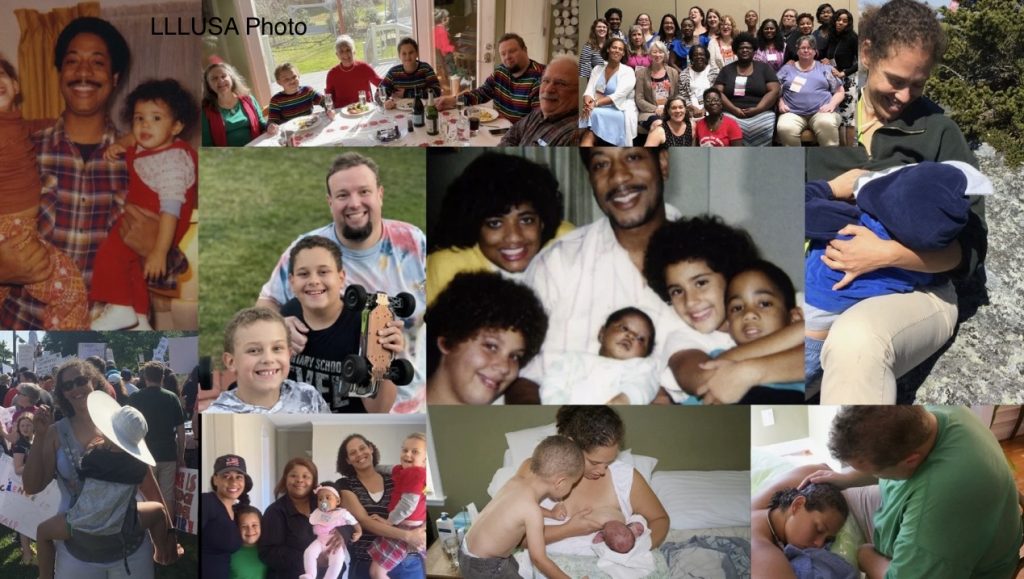
I spent a long time talking with them, and I had to answer honestly: we could be more welcoming. They pointed out that our classic logo doesn’t include a partner. And they’re right. When we created it, we were intentional about something that mattered deeply to us, recognizing a parent and a baby on their own, as a whole family. That intention still matters. And at the same time, these fathers reminded me that collective power is not collective if anyone is left standing outside the circle. Fathers and partners are not on the sidelines of the lactation journey. They are protectors and essential members of the care team.
I say that as a person who lost my own father when I was in my early 20s, and who lost a half brother when I was 16 and he was in his 30s. My sister Truth and I often talked, when we were younger, about how every man we ever loved died or left. The safety of my own little baby when he grew in my body, what kind of man he would be, how he would walk through the space. My relationship with trusting men not to die is strained. And my husband is my biggest champion in this work. He keeps showing up. He keeps cheerleading. And maybe my organization could be more trusting of dads to show up.
 I’m carrying their question home with me, and I’m grateful to them for asking it.
The other thing I’d name is smaller and less dramatic. Some of the best of that conference happened in a car. I shared a ride to the airport with Felicia James, who runs home-visit and virtual lactation support out of Baltimore and is working on the Medicaid reimbursement evidence a lot of us are waiting on. That ride was one of my favorite parts of the whole conference. Conferences are worth the registration fee for the sessions. They’re worth the trip for the car rides.
Your award recognizes innovation. What does innovation look like to you when we think about improving lactation outcomes for communities that have historically been underserved or overlooked?
Most of what gets called innovation in our field is a rediscovery. Someone writes a grant to fund what a grandmother has been doing for free for forty years, and we call it a pilot. Most of what my work is every day is obvious to anyone who’s ever had a baby, been a mom, or breastfed a child. Most of what I do every day is listen to families and take what they say and put it into public health language, or just keep saying it over and over and over again. Believing parents when they tell me things. Patiently explaining it to legislators and policy makers. And patience, patience is a keyword here, because the system change that we do never helps somebody who has a newborn. The change takes years. It’s about helping our grandchildren, not our babies.
So my honest answer is that innovation in underserved communities usually means one of three things:
Sometimes it means paying people for work they were already doing. Peer counselors, doulas, community health workers, the auntie on the phone at midnight. The innovation is a paycheck and a reimbursement code, not a new idea. Mama Bugg says it plainly: we have to be paid for the work we’re doing, or we will never truly reach equity.
Sometimes it means moving support out of the building. The families who most need lactation care are often the least able to get to a clinic on a Tuesday at 2 p.m. Meeting people at church, at the library, at the resource fair, in their living room, in their language. That’s not outreach, that’s design.
And sometimes it means planning for the emergency before it arrives. After Helene, our SAFE Team supported more than 150 shelters in Western North Carolina with infant feeding sanitation kits, milk sharing networks, and rapid needs assessments. We are now working on federal policy modeled on the PETS Act, which requires emergency plans to account for pets. We are not asking for money. That’s right, did you hear me? We have more infrastructure for pets during an emergency than we do for our infants. We are asking for a plan. Our line for it is simple: we want our babies as protected as our pets.
Innovation, in the communities that have been overlooked longest, usually means finally writing down what people have been doing for free.
None of that is clever. It’s just overdue.
What gives you hope right now? Are there people, programs, or community efforts more of us should know about? How can readers get involved or stay connected?
What gives me hope is that the pipeline is real. The HBCU lactation programs, like NC A&T’s Human Lactation Pathway 2 Program, are graduating cohorts of Black and Brown lactation professionals every single year. That is a structural change, not a feel-good story, and it is happening now.
I’d also point people to ROSE and to Dr. Kimarie Bugg, whose career is the reason a lot of us have one.
Closer to home, there are three things I’d invite readers into:
Emergency infant feeding. SAFE Infant Feeding, which I co-founded, and the SAFE Meals for Infants policy group. If your community has never asked what happens to feed babies when the power goes out, that’s a conversation you can start this month.
Your local Ten Steps. Breastfeeding Family Friendly Communities supports 14 community-led projects, and the model is meant to be copied. If your town doesn’t have one, you can start one. Visit breastfeedingcommunities.org, or write to [email protected].
Recognize the businesses that get it right. Breastfeed Durham has recognized roughly 380 local businesses as Breastfeeding Welcome Here, and the North Carolina Breastfeeding Coalition runs a statewide Employers & Community Partners Award. It costs about two dollars to mail a business a window cling, and it changes how a family feels walking through that door.
And of course, come to a La Leche League meeting. Durham’s Group meetings are listed at LLLdurham.org, free, led by accredited volunteer Leaders, and children welcome. That’s still where a lot of this starts.
Readers are welcome to reach me at [email protected].
Supporting Breastfeeding Families–Today, Tomorrow, Always
Please consider donating to La Leche League USA.
Your gift helps support this blog and the website!
Donations of any amount are gratefully accepted. Thank you!
Follow us on:


Leave a Comment
Posted: November 10, 2026 by Yael Breimer
An Interview with Love Anderson: Innovation in Lactation Award Recipient: Part 2
Recently, New Beginnings had an opportunity to interview a trailblazer in the field of human milk feeding. Love Anderson has made significant contributions to the world of La Leche League and beyond for breastfeeding families, and we are sharing the second part of her story below. We shared the first part of this conversation on last week’s blog.
The conversation continues below.
Winning the award was a complete surprise. They had not warned me, and I still had food in my mouth. I don’t know how it feels to win awards, especially from the way they spoke about the award. What does it feel like to win an award for doing the most difficult thing you’ve ever done in your life because you were so dang angry? I think that’s what I keep going back to. It’s about the system change. It’s about the movement. It’s about seeing the change of the world. It’s not about the awards. Although I have to say, I was really surprised.
My most poignant moment wasn’t the awards ceremony. It was a conversation with the fathers present, Black men doing the work of showing up for their families, who asked the rest of us a direct question: is your organization welcoming to dads, and particularly to Black men?
I spent a long time talking with them, and I had to answer honestly: we could be more welcoming. They pointed out that our classic logo doesn’t include a partner. And they’re right. When we created it, we were intentional about something that mattered deeply to us, recognizing a parent and a baby on their own, as a whole family. That intention still matters. And at the same time, these fathers reminded me that collective power is not collective if anyone is left standing outside the circle. Fathers and partners are not on the sidelines of the lactation journey. They are protectors and essential members of the care team.
I say that as a person who lost my own father when I was in my early 20s, and who lost a half brother when I was 16 and he was in his 30s. My sister Truth and I often talked, when we were younger, about how every man we ever loved died or left. The safety of my own little baby when he grew in my body, what kind of man he would be, how he would walk through the space. My relationship with trusting men not to die is strained. And my husband is my biggest champion in this work. He keeps showing up. He keeps cheerleading. And maybe my organization could be more trusting of dads to show up.
The other thing I’d name is smaller and less dramatic. Some of the best of that conference happened in a car. I shared a ride to the airport with Felicia James, who runs home-visit and virtual lactation support out of Baltimore and is working on the Medicaid reimbursement evidence a lot of us are waiting on. That ride was one of my favorite parts of the whole conference. Conferences are worth the registration fee for the sessions. They’re worth the trip for the car rides.
Your award recognizes innovation. What does innovation look like to you when we think about improving lactation outcomes for communities that have historically been underserved or overlooked?
Most of what gets called innovation in our field is a rediscovery. Someone writes a grant to fund what a grandmother has been doing for free for forty years, and we call it a pilot. Most of what my work is every day is obvious to anyone who’s ever had a baby, been a mom, or breastfed a child. Most of what I do every day is listen to families and take what they say and put it into public health language, or just keep saying it over and over and over again. Believing parents when they tell me things. Patiently explaining it to legislators and policy makers. And patience, patience is a keyword here, because the system change that we do never helps somebody who has a newborn. The change takes years. It’s about helping our grandchildren, not our babies.
So my honest answer is that innovation in underserved communities usually means one of three things:
Sometimes it means paying people for work they were already doing. Peer counselors, doulas, community health workers, the auntie on the phone at midnight. The innovation is a paycheck and a reimbursement code, not a new idea. Mama Bugg says it plainly: we have to be paid for the work we’re doing, or we will never truly reach equity.
Sometimes it means moving support out of the building. The families who most need lactation care are often the least able to get to a clinic on a Tuesday at 2 p.m. Meeting people at church, at the library, at the resource fair, in their living room, in their language. That’s not outreach, that’s design.
And sometimes it means planning for the emergency before it arrives. After Helene, our SAFE Team supported more than 150 shelters in Western North Carolina with infant feeding sanitation kits, milk sharing networks, and rapid needs assessments. We are now working on federal policy modeled on the PETS Act, which requires emergency plans to account for pets. We are not asking for money. That’s right, did you hear me? We have more infrastructure for pets during an emergency than we do for our infants. We are asking for a plan. Our line for it is simple: we want our babies as protected as our pets.
Innovation, in the communities that have been overlooked longest, usually means finally writing down what people have been doing for free.
None of that is clever. It’s just overdue.
What gives you hope right now? Are there people, programs, or community efforts more of us should know about? How can readers get involved or stay connected?
What gives me hope is that the pipeline is real. The HBCU lactation programs, like NC A&T’s Human Lactation Pathway 2 Program, are graduating cohorts of Black and Brown lactation professionals every single year. That is a structural change, not a feel-good story, and it is happening now.
I’d also point people to ROSE and to Dr. Kimarie Bugg, whose career is the reason a lot of us have one.
Closer to home, there are three things I’d invite readers into:
Emergency infant feeding. SAFE Infant Feeding, which I co-founded, and the SAFE Meals for Infants policy group. If your community has never asked what happens to feed babies when the power goes out, that’s a conversation you can start this month.
Your local Ten Steps. Breastfeeding Family Friendly Communities supports 14 community-led projects, and the model is meant to be copied. If your town doesn’t have one, you can start one. Visit breastfeedingcommunities.org, or write to [email protected].
Recognize the businesses that get it right. Breastfeed Durham has recognized roughly 380 local businesses as Breastfeeding Welcome Here, and the North Carolina Breastfeeding Coalition runs a statewide Employers & Community Partners Award. It costs about two dollars to mail a business a window cling, and it changes how a family feels walking through that door.
And of course, come to a La Leche League meeting. Durham’s Group meetings are listed at LLLdurham.org, free, led by accredited volunteer Leaders, and children welcome. That’s still where a lot of this starts.
Readers are welcome to reach me at [email protected].
Supporting Breastfeeding Families–Today, Tomorrow, Always
Please consider donating to La Leche League USA.
Your gift helps support this blog and the website!
Donations of any amount are gratefully accepted. Thank you!
Follow us on:
Facebook
Category: Breastfeeding and Lifestyle, LLL Support, National/International Events/Projects
Subscribe to Our Blog
Upcoming events:
La Leche League Meetings